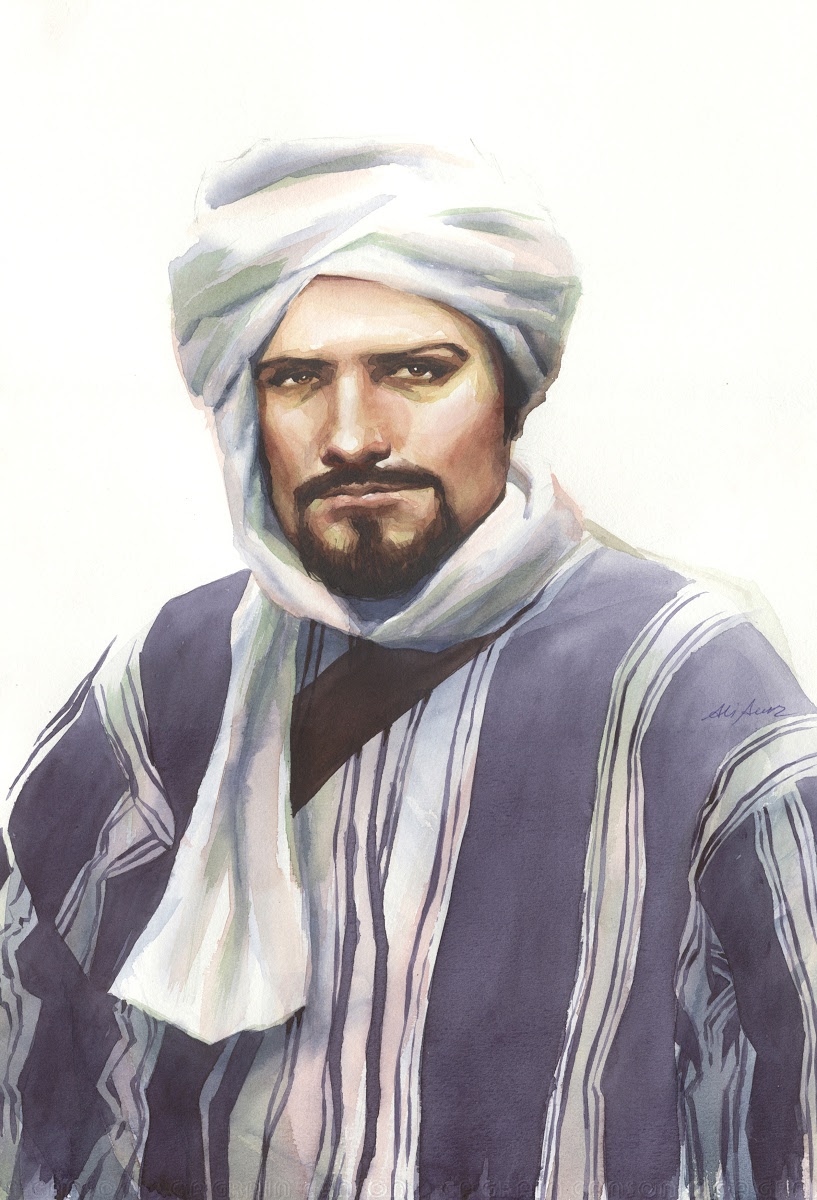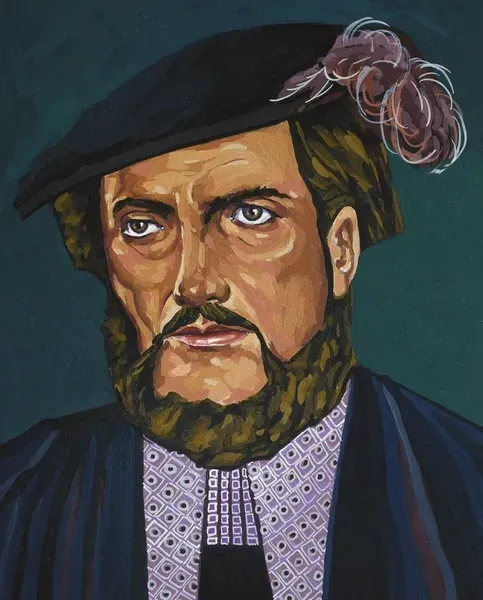
Amerigo Vespucci
An Italian explorer and navigator whose name was given to the continents of the Americas, recognizing them as a distinct New World.
This biography of Amerigo Vespucci helps you learn English through real historical stories.
born1454
died1512
nationalityItalian
known fordemonstrating that the New World was not Asia, leading to the naming of America
fieldexploration and cartography
Key Takeaways
- He realized the lands discovered by Columbus were not Asia, but a New World
- He carefully observed and mapped the coast of South America
- His published letters about his voyages became widely popular in Europe
- The continents of North and South America are named after him
Life Timeline
1454
Born in Florence, Italy
1492
Moved to Seville, Spain to work as a merchant
1497
Claimed to have made his first voyage to the New World
1499
Sailed to the northern coast of South America
1501
Undertook a Portuguese expedition, concluding the landmass was a new continent
1507
The name 'America' first appeared on a map by Martin Waldseemüller
1512
Died in Seville, Spain
Biography Reading: Amerigo Vespucci
background
Amerigo Vespucci was born in 1454 in Florence, Italy, into a prominent and well-connected family. He received a rigorous education, studying physics, geometry, and astronomy, which prepared him for a career in commerce and navigation. In his late thirties, he moved to Seville, Spain, to work for the powerful Medici family as a merchant and banker. It was there that he became fascinated by the recent voyages of Christopher Columbus and decided to leave his business career to explore the seas himself.
achievement
Between 1497 and 1504, Vespucci participated in several voyages to the New World under the flags of Spain and Portugal. During a pivotal expedition in 1501, he sailed far down the coast of South America and carefully observed the constellations, indigenous people, and wildlife. Unlike Columbus, who believed he had reached Asia, Vespucci correctly deduced that this massive landmass was an entirely new continent previously unknown to Europeans. His detailed accounts of these distinct environments convinced many scholars that a "New World" had indeed been found.
impact
Vespucci's vivid letters describing his travels were published and widely read across Europe, bringing him significant fame. In 1507, a German mapmaker named Martin Waldseemüller was so impressed by Vespucci's writings that he produced a new world map. On this map, he labeled the newly discovered southern continent "America," a feminized Latin version of Amerigo's name. The name quickly caught on, forever cementing Vespucci's legacy as the man who conceptually defined the Americas, even though others had physically arrived there first.
Essential Vocabulary
prominent
important or famous
deduce
to arrive at a fact or a conclusion by reasoning
constellation
a group of stars forming a recognizable pattern
landmass
a continent or other large body of land
mapmaker
a person who makes maps; a cartographer
cement
to make something such as an agreement or a legacy stronger
Knowledge Check Quiz
FACTUAL1 / 4
Who first labeled the new continent 'America' on a map?
Flashcards
Flashcard
Who was Amerigo Vespucci?
An Italian explorer whose name was given to the continents of the Americas.
1 / 9