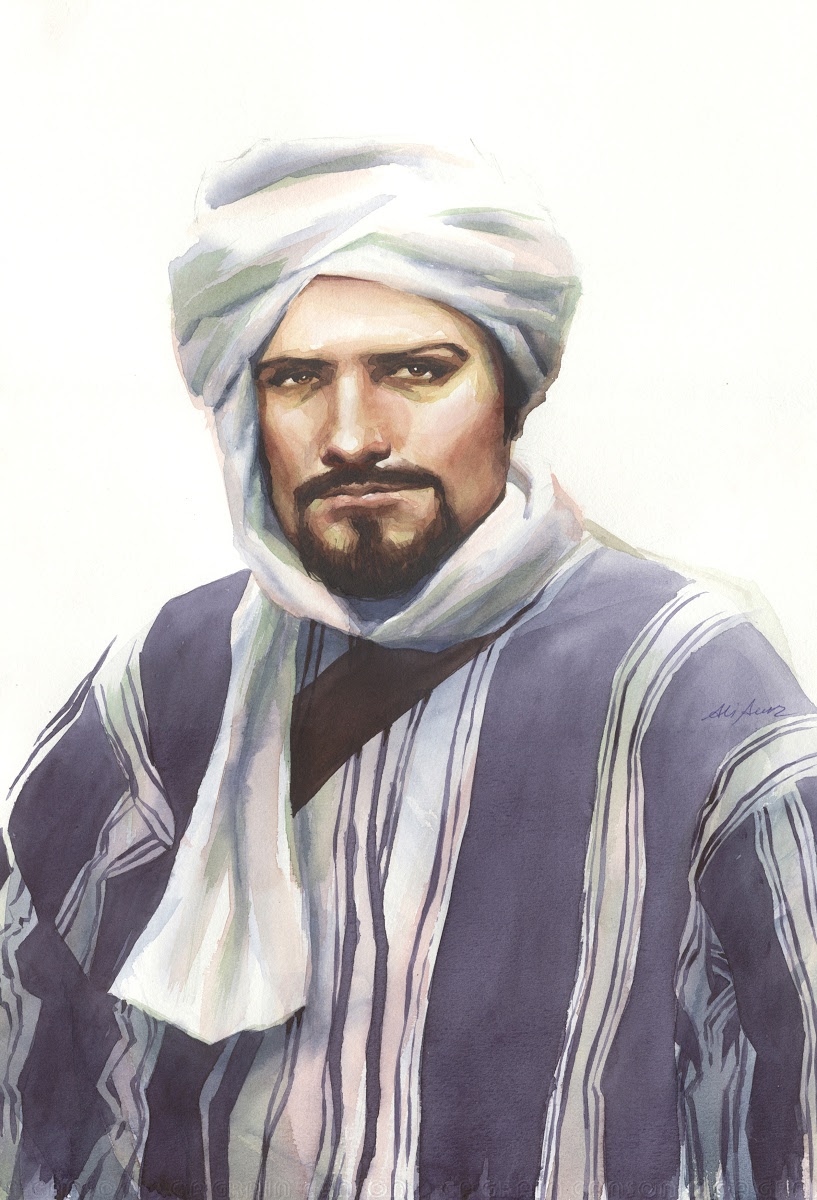
Ibn Battuta
A Moroccan Muslim scholar and explorer who traveled extensively throughout the medieval Islamic world and beyond, documenting his epic journeys.
This biography of Ibn Battuta helps you learn English through real historical stories.
born1304
died1368
nationalityMoroccan
known forhis extensive travels across the Islamic world and dictating the Rihla
fieldexploration and geography
Key Takeaways
- He traveled over 75,000 miles across the Islamic world and beyond
- He began his journey as a pilgrimage to Mecca but traveled for 30 years
- He worked as an Islamic judge for various rulers, including the Sultan of Delhi
- He dictated the 'Rihla', a famous book documenting his epic travels
Life Timeline
1304
Born in Tangier, Morocco
1325
Left home to perform the Hajj pilgrimage to Mecca
1332
Arrived in India and served as a judge for the Sultan of Delhi
1345
Traveled to China, reaching Quanzhou and Beijing
1349
Returned to Tangier briefly before traveling to Al-Andalus and Mali
1354
Dictated the account of his travels, known as the Rihla
Biography Reading: Ibn Battuta
background
Ibn Battuta was born in 1304 in Tangier, Morocco, into a family of Islamic legal scholars. As a young man, he studied Islamic law, preparing for a traditional career as a judge. In 1325, at the age of 21, he set out on a journey to Mecca to perform the Hajj pilgrimage. He initially expected to be away for a few years, but his insatiable curiosity and desire to seek knowledge turned a simple pilgrimage into a lifelong adventure.
achievement
Over the next three decades, Ibn Battuta traveled across most of the Islamic world and beyond, covering over 75,000 miles. He visited regions that make up modern-day North Africa, the Middle East, East Africa, Central Asia, India, Southeast Asia, and China. Unlike Marco Polo, who traveled mostly as a merchant in foreign lands, Ibn Battuta traveled within the vast Dar al-Islam (the Islamic world), where his education allowed him to easily find work as a judge and be welcomed by local rulers. His travels provided a unique window into the diverse cultures, economies, and politics of the 14th-century world.
impact
After returning to Morocco in 1354, the Sultan of Morocco ordered him to dictate his memories to a scholar. The resulting book, commonly known as the "Rihla" (The Journey), is one of the most famous travel logs in history. It offers an incredibly detailed and valuable record of medieval civilization, trade routes, and societal norms. Today, Ibn Battuta is widely celebrated as one of the greatest travelers of all time, whose remarkable journeys surpassed those of any previous explorer in recorded history.
Essential Vocabulary
pilgrimage
a journey to a holy place for religious reasons
insatiable
impossible to satisfy
dictate
to speak aloud so that someone else can write it down
diverse
showing a great deal of variety; very different
surpass
to do or be better than somebody or something
log
a regular record of incidents, especially during a voyage
Knowledge Check Quiz
FACTUAL1 / 4
Why did Ibn Battuta originally leave his home in Morocco in 1325?
Flashcards
Flashcard
Who was Ibn Battuta?
A Moroccan scholar and one of the greatest travelers in history.
1 / 9