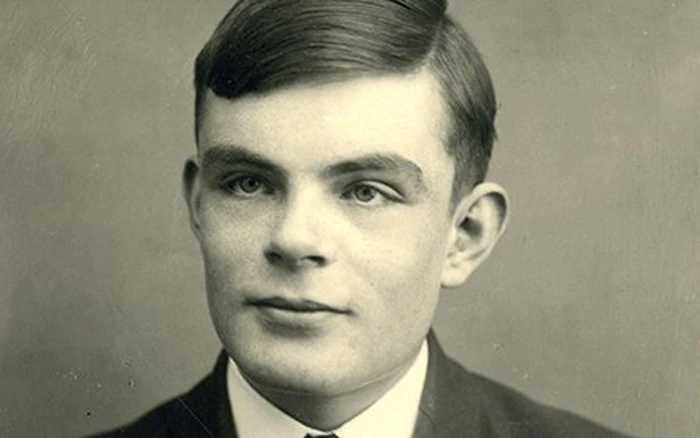
Alan Turing
A brilliant British mathematician and logician who laid the theoretical foundations for computer science and artificial intelligence.
This biography of Alan Turing helps you learn English through real historical stories.
born1912
died1954
nationalityBritish
known forcracking the Enigma code and inventing the Turing machine
fieldmathematics and computer science
Key Takeaways
- He invented the concept of the Turing machine, the basis of modern computers
- He played a crucial role in cracking the German Enigma code during WWII
- He proposed the Turing Test to measure artificial intelligence
- He is widely considered the father of theoretical computer science
Life Timeline
1912
Born in London, England
1936
Published his paper introducing the 'Turing machine'
1939
Joined the codebreaking team at Bletchley Park
1941
Helped crack the German Enigma code, shortening WWII
1950
Proposed the Turing Test for artificial intelligence
1954
Died in Cheshire, England
Biography Reading: Alan Turing
background
Alan Turing was born in 1912 in London, England. From a young age, he showed an extraordinary aptitude for math and science, often solving complex problems without learning the standard methods. He studied mathematics at King's College, Cambridge, where he became fascinated by logic and the limits of what could be calculated. Although he was sometimes seen as eccentric, his unique way of thinking allowed him to see solutions that others completely missed.
achievement
In 1936, Turing introduced the concept of a "universal machine," now known as the Turing machine. This theoretical device could process symbols on a tape based on a set of rules, essentially describing how all modern computers work before they even existed. During World War II, Turing put his genius to practical use by leading a team of codebreakers at Bletchley Park. Together, they built the Bombe machine to crack the complex German Enigma code, an achievement that saved millions of lives and significantly shortened the war.
impact
After the war, Turing continued his pioneering work by exploring the possibility of artificial intelligence. In 1950, he proposed the "Turing Test" to determine whether a machine could think and converse like a human. Tragically, despite his heroism, he was prosecuted for his homosexuality in 1952, which was illegal in the UK at the time, and died two years later. Today, Alan Turing is celebrated as the father of theoretical computer science, and his legacy lives on in every smartphone, laptop, and AI system we use.
Essential Vocabulary
aptitude
a natural ability or skill
eccentric
considered by other people to be strange or unusual
theoretical
concerned with the ideas and principles of a subject rather than practical uses
codebreaker
a person who works out the meaning of secret messages
artificial intelligence
the ability of a computer program or a machine to think and learn
prosecute
to officially charge somebody with a crime in court
Knowledge Check Quiz
FACTUAL1 / 4
What machine did Turing and his team build to break the Enigma code?
Flashcards
Flashcard
Who was Alan Turing?
A British mathematician considered the father of theoretical computer science.
1 / 9