Isaac Newton
A scientist who discovered the laws of motion and universal gravity.
This biography of Isaac Newton helps you learn English through real historical stories.
born1643
died1727
nationalityEnglish
known forLaws of motion and universal gravitation
fieldphysics and mathematics
Key Takeaways
- He discovered the laws of motion and gravity
- He published the famous book Principia Mathematica
- He helped invent a new type of math called calculus
- His work is the foundation of classical physics
Life Timeline
1643
Born in England
1661
Entered Cambridge University
1665
Developed theories on calculus and gravity during the Great Plague
1687
Published Principia Mathematica
1705
Knighted by Queen Anne
1727
Died in London
Biography Reading: Isaac Newton
background
Isaac Newton was born in 1643 in England. He grew up on a farm, but he was not interested in farming. Instead, he loved reading and building mechanical toys. He went to Cambridge University to study, but the school closed because of a disease called the Great Plague. Newton had to return home for two years. During this quiet time, he thought deeply about math and nature. This period helped him develop some of his greatest ideas.
achievement
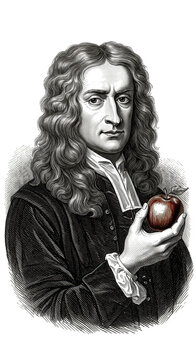
In 1687, Newton published a famous book called Principia Mathematica. In this book, he explained the three laws of motion. These laws describe how objects move and interact. He also introduced the law of universal gravitation. This idea explained that the same force pulling an apple to the ground also keeps the moon in its orbit. His mathematical work, including the creation of calculus, gave scientists new tools to study the world.
impact
Newton's discoveries laid the foundation of classical physics. His laws of motion are still taught in schools everywhere today. For over two hundred years, his ideas were the main way people understood the physical universe. Even modern space travel relies on his calculations to launch rockets. Because of his amazing work, Newton is considered one of the most important scientists in history. His curiosity completely changed human knowledge.
Essential Vocabulary
gravity
the force that pulls objects toward the center of the earth
motion
the act or process of moving
orbit
the curved path of an object around a star or planet
force
physical power or energy
calculate
to find a number or answer by using math
foundation
the basic idea or principle that something is built on
Knowledge Check Quiz
FACTUAL1 / 4
What famous book did Isaac Newton publish in 1687?
Flashcards
Flashcard
Who was Isaac Newton?
A scientist who discovered the laws of motion and gravity.
1 / 9