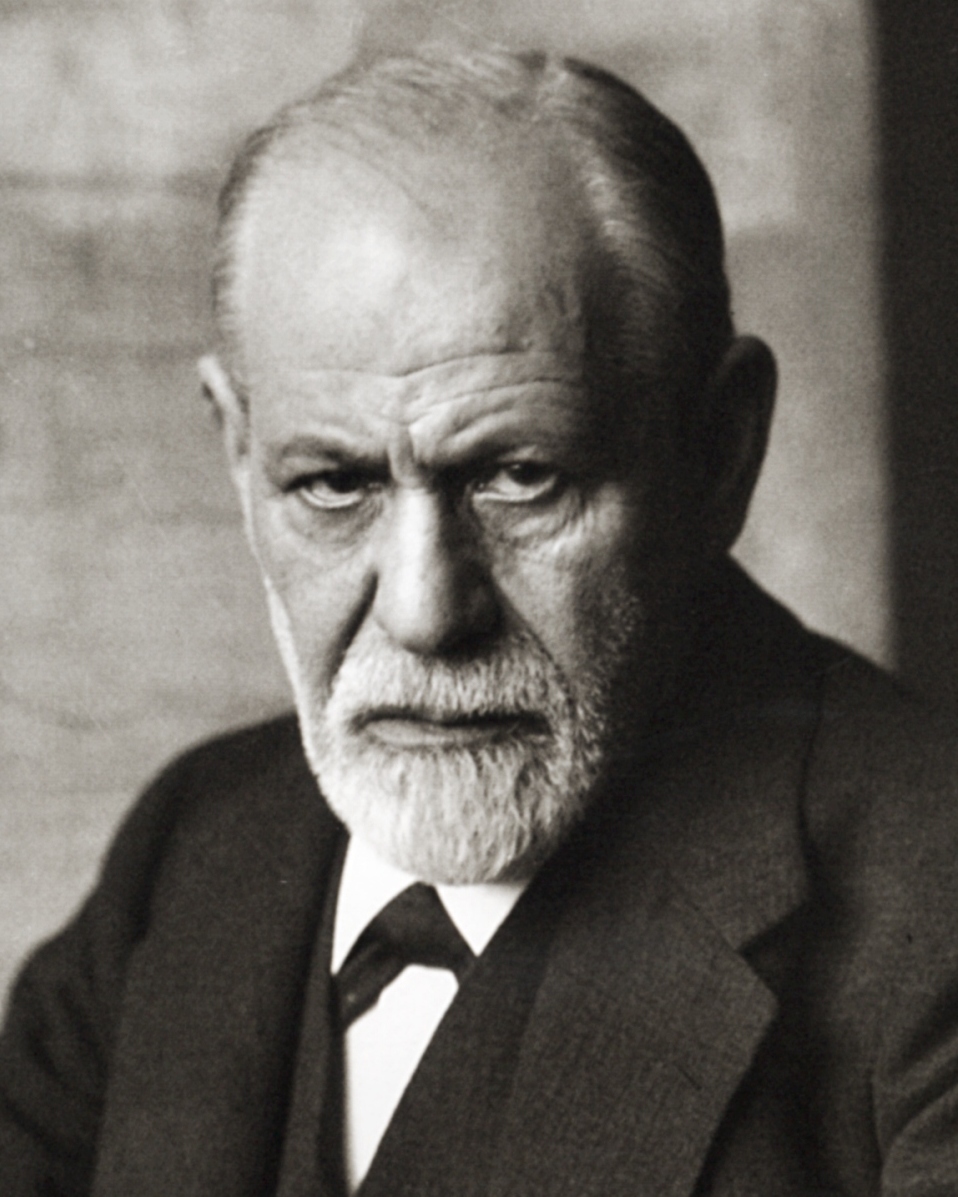
Sigmund Freud
An Austrian neurologist and the founder of psychoanalysis, who profoundly changed how humanity understands the unconscious mind and human behavior.
This biography of Sigmund Freud helps you learn English through real historical stories.
born1856
died1939
nationalityAustrian
known forfounding psychoanalysis and theories of the unconscious mind
fieldneurology and psychology
Key Takeaways
- He founded psychoanalysis, treating psychological issues through dialogue with a psychoanalyst
- He introduced the concept of the unconscious mind and the technique of dream interpretation
- He proposed the structural model of the psyche: the Id, the Ego, and the Superego
- Despite modern scientific critiques, his theories profoundly shaped Western culture, art, and psychiatry
Life Timeline
1856
Born in Freiberg, Moravia (now Czech Republic)
1881
Received his medical degree from the University of Vienna
1899
Published 'The Interpretation of Dreams'
1923
Published 'The Ego and the Id', introducing his structural model of the psyche
1938
Fled to London to escape the Nazi annexation of Austria
1939
Died in London, England
Biography Reading: Sigmund Freud
background
Sigmund Freud was born in 1856 in Freiberg, Moravia, and spent most of his life in Vienna, Austria. He qualified as a doctor of medicine in 1881, initially focusing on neurobiology and the treatment of nervous disorders, such as hysteria. Through his clinical work and collaborations with colleagues like Josef Breuer, Freud began to realize that many of his patients' mental and physical symptoms had no obvious physiological cause. Instead, he hypothesized that these ailments stemmed from deeply buried traumatic memories and repressed emotions hidden within the unconscious mind.
achievement
To treat these psychological distresses, Freud developed "psychoanalysis," a revolutionary clinical method centered on dialogue between the patient and the psychoanalyst. In 1899, he published his masterwork, "The Interpretation of Dreams," famously arguing that dreams are the "royal road to the unconscious." He later introduced a structural model of the human psyche, dividing it into three conflicting parts: the primitive "Id" driven by basic desires, the moralizing "Superego," and the rational "Ego" that constantly mediates between the two and the external world.
impact
Freud's theories regarding childhood development and human sexuality were highly controversial during his time, yet they attracted a massive international following. In 1938, following the Nazi annexation of Austria, the elderly Freud was forced to flee Vienna and seek refuge in London, where he died a year later. While modern empirical psychology has rejected or heavily modified many of his specific scientific claims, Freud's profound influence on psychiatry, literature, art, and our everyday vocabulary—introducing terms like "denial," "repression," and "Freudian slip"—remains absolutely undeniable.
Essential Vocabulary
psychoanalysis
a system of psychological theory and therapy which aims to treat mental disorders by investigating the interaction of conscious and unconscious elements
unconscious
the part of the mind which is inaccessible to the conscious mind but which affects behavior and emotions
repressed
restrained, inhibited, or kept down; relating to memories or desires pushed into the unconscious
mediates
intervenes between people or forces in a dispute in order to bring about an agreement or reconciliation
psyche
the human soul, mind, or spirit
refuge
a condition of being safe or sheltered from pursuit, danger, or trouble
Knowledge Check Quiz
FACTUAL1 / 4
What is the name of the clinical method Freud developed to treat psychological distress?
Flashcards
Flashcard
Who is the founder of psychoanalysis?
Sigmund Freud.
1 / 9