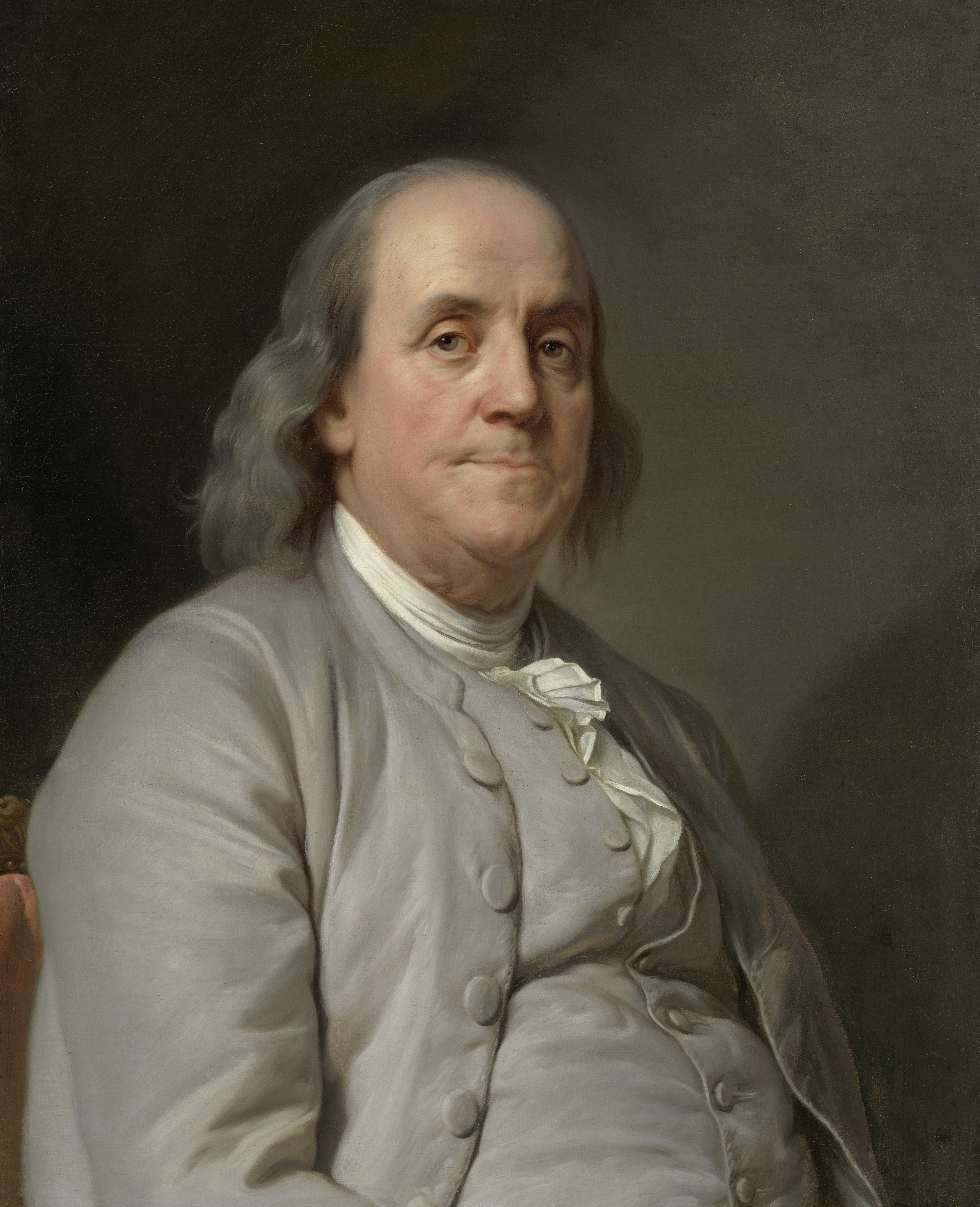
Benjamin Franklin
A Founding Father of the United States, renowned as a polymath, author, scientist, inventor, and diplomat who profoundly shaped early American identity.
This biography of Benjamin Franklin helps you learn English through real historical stories.
born1706
died1790
nationalityAmerican
known forDiscoveries in electricity, Poor Richard's Almanack, and drafting the Declaration of Independence
fieldscience, politics, and literature
Key Takeaways
- He was a leading Founding Father who signed the Declaration of Independence and the U.S. Constitution
- He was a brilliant polymath and scientist, proving lightning is electricity via his famous kite experiment
- He invented practical items like the lightning rod and bifocal glasses, refusing to patent them for the public good
- He was a highly successful printer and author, shaping American culture with 'Poor Richard's Almanack'
Life Timeline
1706
Born in Boston, Massachusetts
1732
Published the first edition of 'Poor Richard's Almanack'
1752
Conducted the famous kite experiment to prove lightning is electricity
1776
Helped draft and signed the United States Declaration of Independence
1783
Negotiated the Treaty of Paris, ending the Revolutionary War
1790
Died in Philadelphia, Pennsylvania
Biography Reading: Benjamin Franklin
background
Benjamin Franklin was born in 1706 in Boston, Massachusetts, into a large, modest family. With only two years of formal schooling, he became a voracious self-taught reader and a highly skilled printer. As a young man, he moved to Philadelphia and eventually established his own successful printing business. He gained immense popularity and wealth through publishing the "Pennsylvania Gazette" and "Poor Richard's Almanack," a yearly publication filled with practical advice, weather forecasts, and witty aphorisms that deeply shaped the industrious, pragmatic character of early America.
achievement
Beyond his literary and business pursuits, Franklin was a visionary polymath and scientist of global renown. His insatiable curiosity led to groundbreaking discoveries in the study of electricity, most famously demonstrated by his dangerous 1752 kite experiment in a thunderstorm, which proved that lightning is electrical in nature. He applied his scientific mind to practical inventions, creating the lightning rod, bifocal glasses, and the efficient Franklin stove. Crucially, he refused to patent any of his inventions, believing that scientific progress should be freely shared to improve the common good of society.
impact
As tensions with Great Britain escalated, Franklin transitioned into a crucial role as a statesman and diplomat. He was the only Founding Father to sign all four key documents establishing the U.S.: the Declaration of Independence, the Treaty of Alliance with France, the Treaty of Paris, and the U.S. Constitution. During the Revolutionary War, his immense charm and intellect secured vital financial and military support from France, without which the American revolution would likely have failed. Today, Franklin remains the quintessential American self-made man—a tireless innovator who seamlessly blended intellectual brilliance with public service.
Essential Vocabulary
aphorism
a pithy observation that contains a general truth
industrious
diligent and hard-working
polymath
a person of wide-ranging knowledge or learning
patent
to obtain a government authority conferring a right or title, especially the sole right to exclude others from making, using, or selling an invention
statesman
a skilled, experienced, and respected political leader or figure
quintessential
representing the most perfect or typical example of a quality or class
Knowledge Check Quiz
FACTUAL1 / 4
What did Benjamin Franklin's dangerous 1752 kite experiment prove?
Flashcards
Flashcard
Who wrote 'Poor Richard's Almanack' and invented the lightning rod?
Benjamin Franklin.
1 / 9