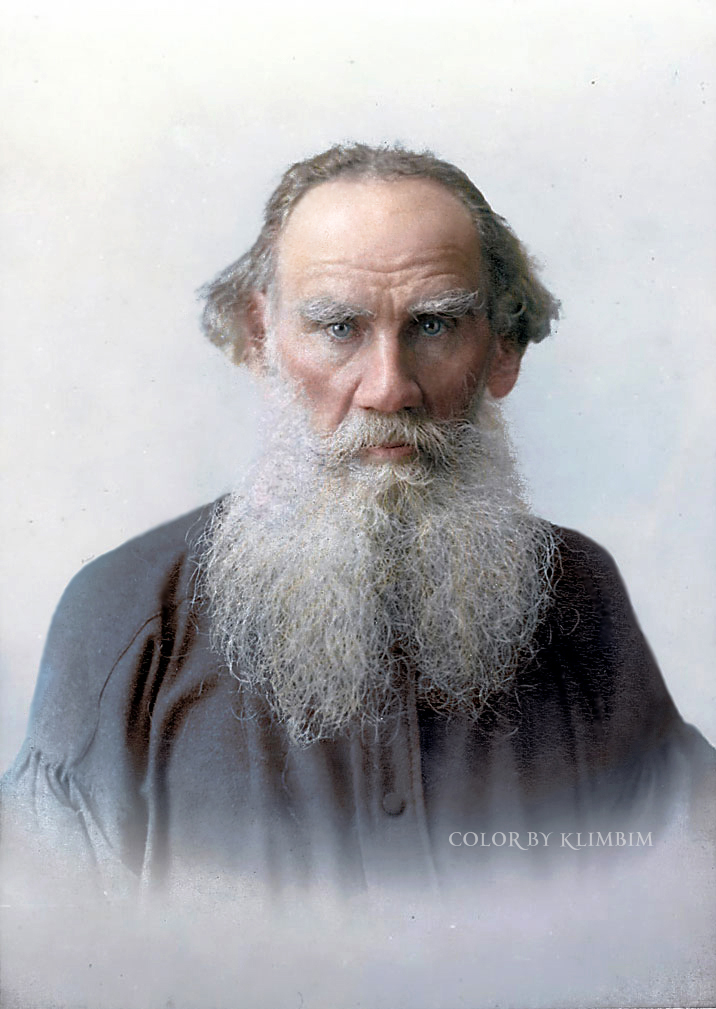
Leo Tolstoy
A Russian writer and philosopher widely regarded as one of the greatest novelists of all time, famous for his epic works of realist fiction.
This biography of Leo Tolstoy helps you learn English through real historical stories.
born1828
died1910
nationalityRussian
known forWar and Peace, Anna Karenina, and Christian pacifism
fieldliterature and philosophy
Key Takeaways
- He wrote two of world literature's greatest masterpieces: War and Peace and Anna Karenina
- His harrowing experiences in the Crimean War shaped his lifelong hatred of violence
- He is considered a master of realist fiction, known for deep psychological character development
- In his later years, he became a radical Christian pacifist, inspiring figures like Mahatma Gandhi
Life Timeline
1828
Born at the Yasnaya Polyana estate in the Russian Empire
1852
Published his first novel, 'Childhood'
1869
Published his epic masterpiece, 'War and Peace'
1877
Published his acclaimed tragic novel, 'Anna Karenina'
1880s
Experienced a profound moral crisis and embraced Christian pacifism
1910
Died of pneumonia at the Astapovo railway station after fleeing his home
Biography Reading: Leo Tolstoy
background
Count Lev Nikolayevich Tolstoy was born in 1828 into an aristocratic Russian family at their estate of Yasnaya Polyana. After dropping out of university and racking up heavy gambling debts, he joined the army and served in the Crimean War. His harrowing experiences on the battlefield profoundly shaped his understanding of human suffering and the brutal realities of violence. He began writing during this time, achieving early literary success with his semi-autobiographical trilogy, "Childhood, Boyhood, and Youth."
achievement
Tolstoy's literary genius reached its absolute peak with the publication of his two monumental masterpieces: "War and Peace" (1869) and "Anna Karenina" (1877). "War and Peace" is a massive, sweeping epic that intertwines the lives of several aristocratic families against the backdrop of Napoleon's invasion of Russia. "Anna Karenina," opening with the famous line "Happy families are all alike; every unhappy family is unhappy in its own way," is a tragic exploration of love, hypocrisy, and social constraints. Both works are universally hailed as pinnacles of realist fiction, celebrated for their psychological depth and intricate character development.
impact
Despite his immense fame and wealth, Tolstoy experienced a profound moral and spiritual crisis in his later years. He rejected his aristocratic lifestyle and the Russian Orthodox Church, instead embracing a radical form of Christian anarchism and pacifism. He advocated for asceticism, non-violent resistance, and solidarity with the peasantry. His philosophical writings on non-violence profoundly inspired 20th-century leaders like Mahatma Gandhi and Martin Luther King Jr. In 1910, at the age of 82, he fled his estate to live as a wandering ascetic but tragically died of pneumonia at a remote railway station.
Essential Vocabulary
aristocratic
belonging to, having the qualities of, or favoring the aristocracy
harrowing
acutely distressing or painful
hypocrisy
the practice of claiming to have moral standards or beliefs to which one's own behavior does not conform
pacifism
the belief that any violence, including war, is unjustifiable under any circumstances
asceticism
severe self-discipline and avoidance of all forms of indulgence
anarchism
belief in the abolition of all government and the organization of society on a voluntary, cooperative basis
Knowledge Check Quiz
FACTUAL1 / 4
Which of Leo Tolstoy's novels intertwines the lives of aristocratic families during Napoleon's invasion of Russia?
Flashcards
Flashcard
Who wrote the masterpieces 'War and Peace' and 'Anna Karenina'?
Leo Tolstoy.
1 / 9