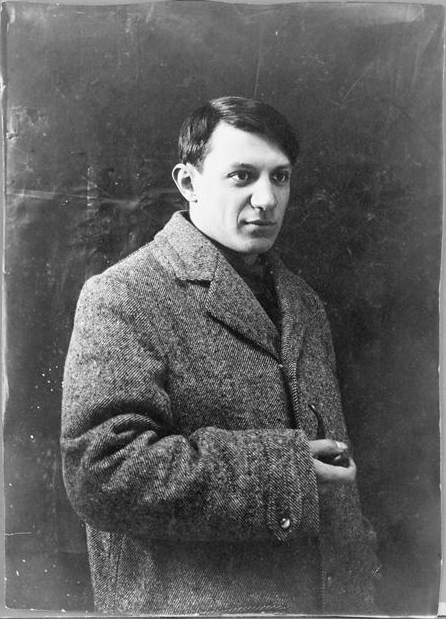
Pablo Picasso
A prolific Spanish painter and sculptor who co-founded the Cubist movement and profoundly revolutionized modern art in the 20th century.
This biography of Pablo Picasso helps you learn English through real historical stories.
born1881
died1973
nationalitySpanish
known forco-founding Cubism, Guernica, Les Demoiselles d'Avignon
fieldart and painting
Key Takeaways
- He co-founded Cubism, breaking subjects into geometric shapes from multiple viewpoints
- His early works are categorized into the somber Blue Period and the warmer Rose Period
- He painted 'Guernica', one of the most famous anti-war paintings in history
- He was wildly prolific, creating an estimated 50,000 artworks over his long lifetime
Life Timeline
1881
Born in Málaga, Spain
1901-1904
The Blue Period, characterized by somber paintings
1907
Painted 'Les Demoiselles d'Avignon', a precursor to Cubism
1937
Painted 'Guernica' in response to the bombing of the Basque town
1973
Died in Mougins, France
Biography Reading: Pablo Picasso
background
Pablo Picasso was born in 1881 in Málaga, Spain. A recognized child prodigy, he mastered classical painting techniques at a very young age before moving to Paris, the epicenter of the European art world. His early career is famously divided into the "Blue Period," characterized by somber, monochromatic paintings depicting the poor and marginalized, and the slightly warmer "Rose Period," which featured circus performers and acrobats.
achievement
Unwilling to be confined by traditional realism, Picasso, alongside Georges Braque, co-founded "Cubism" around 1907. This revolutionary artistic movement dismantled the rules of perspective, breaking objects and figures down into geometric shapes and reassembling them from multiple viewpoints simultaneously. His groundbreaking 1907 masterpiece, "Les Demoiselles d'Avignon," shocked the art world and fundamentally altered the trajectory of modern art, paving the way for abstract expressionism.
impact
Picasso's art also served as a powerful political statement. In 1937, responding to the horrific bombing of a Basque town during the Spanish Civil War, he painted "Guernica." This massive, chaotic canvas remains one of the most moving and powerful anti-war paintings in history. Remaining relentlessly creative until his death in 1973, Picasso produced an estimated 50,000 artworks, including paintings, sculptures, ceramics, and drawings, cementing his status as arguably the most influential artist of the 20th century.
Essential Vocabulary
monochromatic
containing or using only one color
marginalized
treated as insignificant or peripheral
dismantle
to take a machine or structure to pieces; to deconstruct
trajectory
the path followed by a projectile or the development of something over time
canvas
a strong, coarse unbleached cloth made from hemp, flax, or yarn, used for oil painting
prolific
producing many works
Knowledge Check Quiz
FACTUAL1 / 4
Which artistic movement did Pablo Picasso co-found with Georges Braque?
Flashcards
Flashcard
What revolutionary art movement did Pablo Picasso co-found?
Cubism.
1 / 9