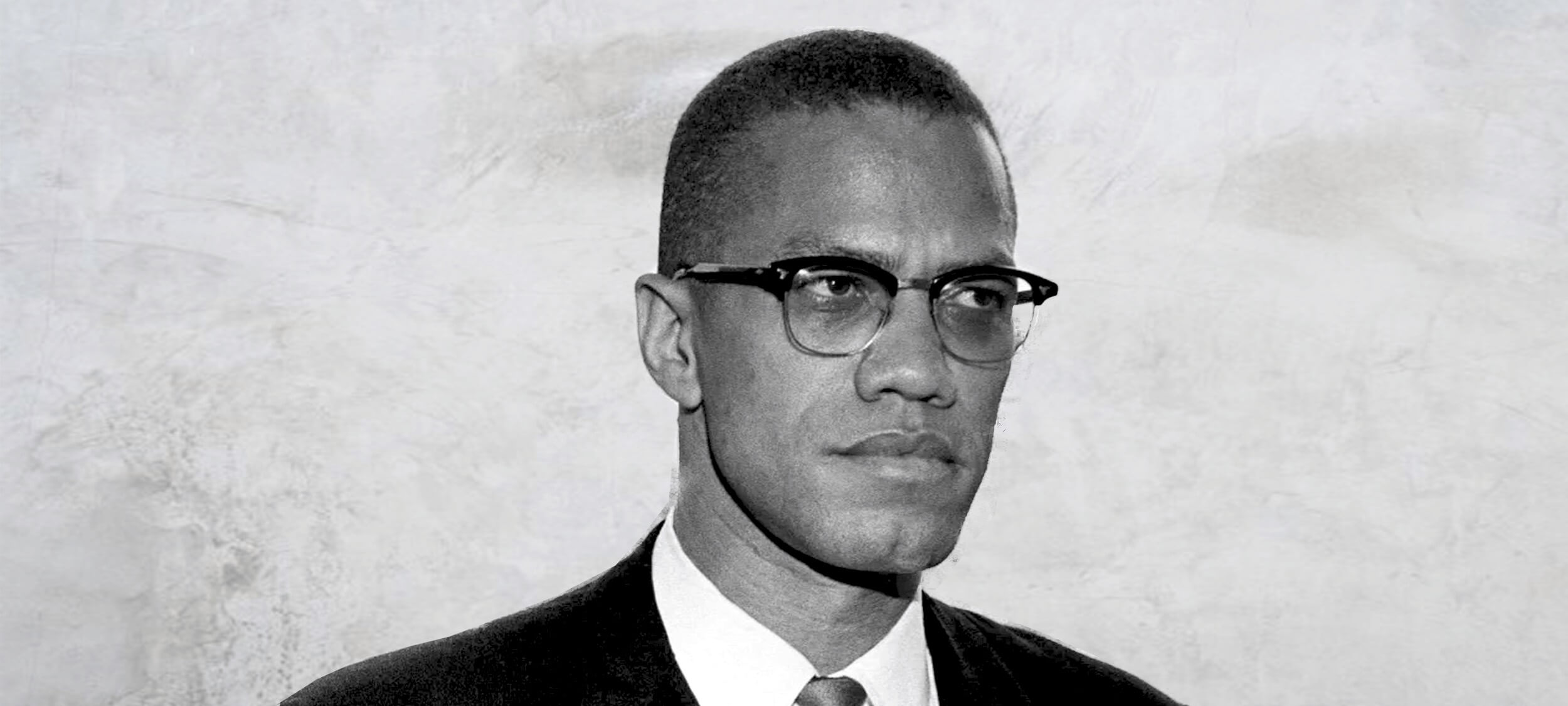
Malcolm X
A prominent African American Muslim minister and human rights activist who advocated for Black empowerment and self-defense during the Civil Rights Movement.
This biography of Malcolm X helps you learn English through real historical stories.
born1925
died1965
nationalityAmerican
known forAdvocating for Black empowerment and his role in the Nation of Islam
fieldcivil rights and human rights
Key Takeaways
- He was a charismatic spokesman for the Nation of Islam and a fierce advocate for Black empowerment
- Unlike MLK's nonviolent integration, he initially preached racial separatism and self-defense 'by any means necessary'
- He changed his surname to 'X' to symbolize his lost African tribal identity
- After his pilgrimage to Mecca, he shifted toward a broader, more inclusive human rights vision before his assassination
Life Timeline
1925
Born Malcolm Little in Omaha, Nebraska
1946
Sentenced to prison, where he joined the Nation of Islam
1952
Released from prison and changed his surname to 'X'
1964
Left the Nation of Islam and went on the Hajj pilgrimage to Mecca
1965
Assassinated in New York City
Biography Reading: Malcolm X
background
Malcolm X was born Malcolm Little in 1925 in Omaha, Nebraska. His childhood was marked by systemic racism and violence; his family was frequently harassed by white supremacist groups, and his father died under highly suspicious circumstances. After his mother was institutionalized, Malcolm spent time in foster homes before turning to a life of street hustle and crime. In 1946, he was sentenced to prison for burglary, a turning point that would fundamentally alter the trajectory of his life.
achievement
While incarcerated, Malcolm underwent a profound intellectual and spiritual transformation, converting to the Nation of Islam (NOI). Rejecting his "slave name," he adopted the surname "X" to represent his lost African tribal name. After his release in 1952, Malcolm X quickly became the NOI's most prominent and charismatic national spokesman. Unlike Martin Luther King Jr., who advocated for nonviolent integration, Malcolm X famously urged his followers to defend themselves against white aggression "by any means necessary" and preached Black pride, economic self-reliance, and racial separatism.
impact
Tensions with the NOI leadership led to Malcolm's bitter departure from the organization in 1964. He subsequently embarked on the Hajj, the Muslim pilgrimage to Mecca, where seeing Muslims of all races worshiping together profoundly shifted his worldview. He embraced Sunni Islam, adopted the name el-Hajj Malik el-Shabazz, and expressed a new willingness to work with civil rights leaders of all races to combat systemic oppression. Tragically, before he could fully realize this broader humanitarian vision, he was assassinated by NOI members in 1965, leaving behind an explosive and enduring legacy as a fierce defender of Black dignity.
Essential Vocabulary
supremacist
an advocate of the supremacy of a particular group, especially one determined by race or sex
charismatic
exercising a compelling charm which inspires devotion in others
separatism
the advocacy or practice of separation of a certain group of people from a larger body on the basis of ethnicity, religion, or gender
integration
the intermixing of people or groups previously segregated
pilgrimage
a pilgrim's journey, typically to a sacred place for religious reasons
oppression
prolonged cruel or unjust treatment or control
Knowledge Check Quiz
FACTUAL1 / 4
Why did Malcolm Little change his last name to 'X'?
Flashcards
Flashcard
What does the 'X' in Malcolm X stand for?
His lost African tribal name.
1 / 9