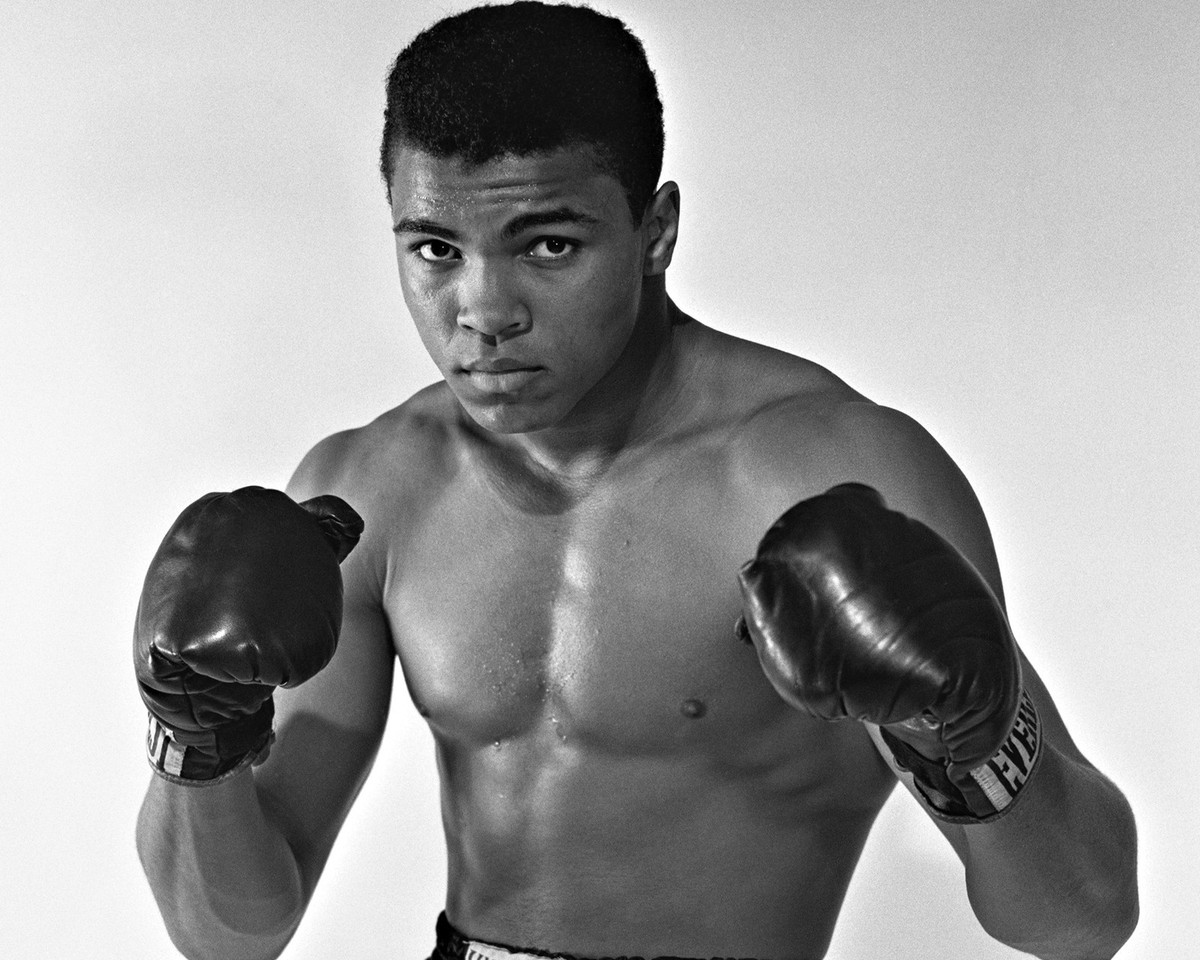
Muhammed Ali
An American professional boxer and global icon who transcended the sport to become a prominent figure in the civil rights and anti-war movements.
This biography of Muhammed Ali helps you learn English through real historical stories.
born1942
died2016
nationalityAmerican
known forHeavyweight boxing champion and conscientious objection to the Vietnam War
fieldsports and civil rights
Key Takeaways
- He is widely considered one of the greatest heavyweight boxers in history, known for his speed and confidence
- He converted to Islam and changed his name to Muhammad Ali, rejecting his 'slave name'
- He sacrificed his peak athletic years by refusing the Vietnam War draft on religious and moral grounds
- He became a global symbol of civil rights, peace, and humanitarianism despite battling Parkinson's disease
Life Timeline
1942
Born Cassius Clay in Louisville, Kentucky
1964
Won the heavyweight title and converted to Islam, becoming Muhammad Ali
1967
Refused the military draft for the Vietnam War and was stripped of his boxing titles
1971
The Supreme Court overturned his draft evasion conviction
1974
Defeated George Foreman in the 'Rumble in the Jungle'
2016
Died in Scottsdale, Arizona
Biography Reading: Muhammed Ali
background
Born Cassius Marcellus Clay Jr. in 1942 in Louisville, Kentucky, he quickly rose to become one of the greatest boxers of all time. Known for his lightning-fast speed, unmatched confidence, and poetic trash-talking, he famously declared he would "float like a butterfly, sting like a bee." In 1964, at just 22 years old, he shocked the world by defeating Sonny Liston to win the world heavyweight championship. Shortly after, he publicly announced his conversion to Islam and changed his "slave name" to Muhammad Ali.
achievement
Ali's most defining moment came outside the boxing ring. In 1967, at the peak of his athletic career, he cited his religious beliefs and opposition to American racism to categorically refuse the military draft for the Vietnam War. He famously stated, "I ain't got no quarrel with them Viet Cong." Consequently, he was stripped of his boxing titles, fined, and sentenced to five years in prison. Though he stayed out of prison on appeal, he was banned from boxing for over three years, sacrificing his prime athletic years for his deeply held anti-war principles.
impact
In 1971, the U.S. Supreme Court unanimously overturned his conviction, allowing him to reclaim his throne. He engaged in some of the most famous fights in history, including the "Rumble in the Jungle" against George Foreman and the "Thrilla in Manila" against Joe Frazier. Retiring in 1981, he was later diagnosed with Parkinson's disease. Despite his declining physical health, he remained a powerful, beloved ambassador for peace, lighting the Olympic cauldron in 1996 and traveling the globe to promote humanitarian causes until his death in 2016.
Essential Vocabulary
transcend
to be or go beyond the range or limits of something
conscientious
wishing to do what is right, especially to do one's work or duty well and thoroughly
quarrel
an angry argument or disagreement
evasion
the action of evading something, especially paying taxes or serving in the military
unanimously
without opposition; with the agreement of all people involved
ambassador
an accredited diplomat or a person who acts as a representative or promoter of a specified activity
Knowledge Check Quiz
FACTUAL1 / 4
What reason did Muhammad Ali give for refusing the military draft in 1967?
Flashcards
Flashcard
What was Muhammad Ali's birth name before he converted to Islam?
Cassius Clay.
1 / 9