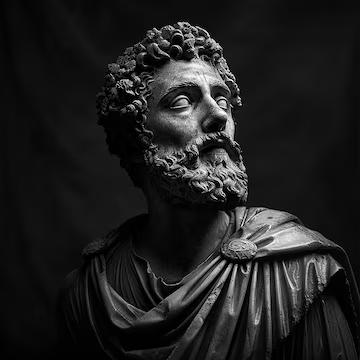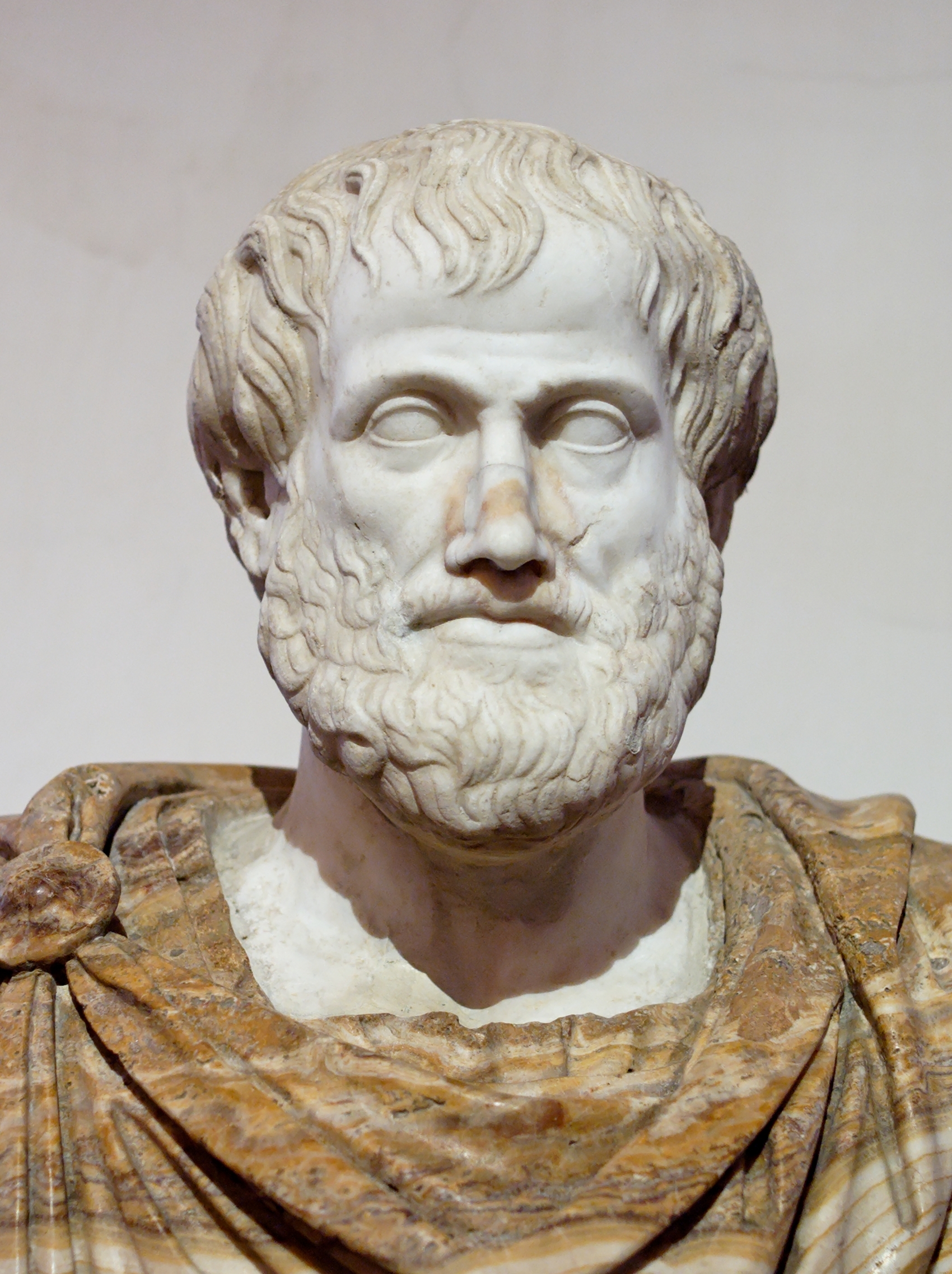
Aristotle
An ancient Greek philosopher and polymath who made fundamental contributions to almost every field of human knowledge, from logic to biology.
This biography of Aristotle helps you learn English through real historical stories.
born384 BC
died322 BC
nationalityGreek (Macedonian/Athenian)
known forformal logic, biological classification, and tutoring Alexander the Great
fieldphilosophy and science
Key Takeaways
- He was Plato's most brilliant student but focused on empirical observation rather than abstract Forms
- He tutored a young Alexander the Great before founding his own school, the Lyceum
- He invented formal logic and made groundbreaking contributions to biology and physics
- His ethical philosophy centers on 'eudaimonia' and finding the 'Golden Mean' between extremes
Life Timeline
384 BC
Born in Stagira, northern Greece
c. 367 BC
Moved to Athens to study at Plato's Academy
c. 343 BC
Invited by King Philip II to tutor a young Alexander the Great
c. 335 BC
Founded his own school, the Lyceum, in Athens
322 BC
Died in Chalcis, Euboea
Biography Reading: Aristotle
background
Born in 384 BC in Stagira, northern Greece, Aristotle was the son of a court physician. At the age of seventeen, he moved to Athens to study at Plato's Academy, where he remained for twenty years as Plato's most brilliant student. However, unlike his mentor who focused on abstract spiritual Forms, Aristotle was deeply fascinated by the observable physical world. He believed that knowledge should be acquired through empirical observation and logical analysis, laying the very groundwork for the modern scientific method.
achievement
After Plato's death, Aristotle left Athens and was eventually invited by King Philip II of Macedon to tutor his young son, who would later become known as Alexander the Great. Years later, Aristotle returned to Athens and founded his own school, the Lyceum. There, he and his students famously walked the grounds while discussing philosophy, earning them the name "Peripatetics" (those who walk about). Aristotle's immense intellect covered an astonishing range of subjects, including physics, biology, zoology, metaphysics, ethics, and politics.
impact
Perhaps his most enduring achievement was the invention of formal logic, primarily through the use of the "syllogism," a structured method of reasoning. He also pioneered the classification of living things, effectively becoming the world's first biologist. In his ethical writings, such as the "Nicomachean Ethics," he argued that the ultimate goal of human life is "eudaimonia" (flourishing or happiness), achieved by living virtuously and finding the "Golden Mean" between extremes. Aristotle died in 322 BC, but his monumental works became the intellectual foundation of Western civilization and Islamic philosophy for over two millennia.
Essential Vocabulary
empirical
based on, concerned with, or verifiable by observation or experience rather than theory
syllogism
a form of reasoning in which a conclusion is drawn from two given or assumed propositions
flourishing
developing rapidly and successfully; thriving
virtuously
in a way that shows high moral standards
classification
the action or process of arranging things in classes or categories
metaphysics
the branch of philosophy that deals with the first principles of things, including abstract concepts such as being, knowing, substance, cause
Knowledge Check Quiz
FACTUAL1 / 4
What was the name of the school that Aristotle founded in Athens?
Flashcards
Flashcard
Who was Aristotle?
An ancient Greek philosopher and polymath who studied under Plato.
1 / 9