William Tyndale
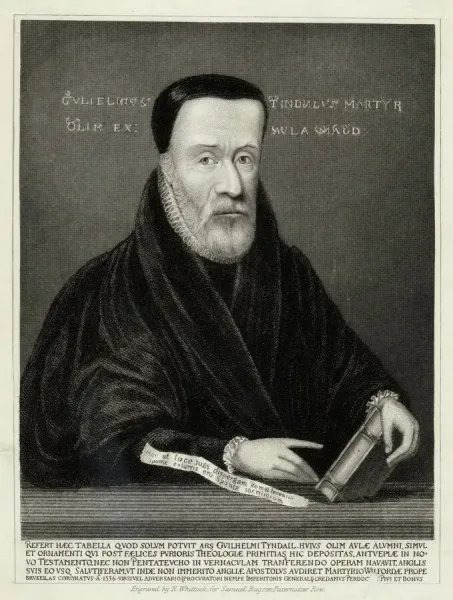
An English scholar and leading figure in the Protestant Reformation who translated the Bible into English directly from the original Hebrew and Greek texts.
This biography of William Tyndale helps you learn English through real historical stories.
bornc. 1494
died1536
nationalityEnglish
known fortranslating the Bible into English
fieldreligion, theology, and linguistics
Key Takeaways
- He was an English scholar who famously translated the Bible into English directly from Hebrew and Greek
- He fled to Europe to safely translate and print his work, smuggling the Bibles back into England
- He was declared a heretic, betrayed, and executed for his defiance of the Church and Crown
- His translation profoundly shaped the modern English language and formed the basis of the King James Bible
Life Timeline
c. 1494
Born in Gloucestershire, England
1515
Graduated from Oxford University
1524
Left England for Germany to translate the Bible safely
1526
Published the first printed edition of the New Testament in English
1536
Betrayed, convicted of heresy, and executed in Antwerp
Biography Reading: William Tyndale
background
William Tyndale was born around 1494 in Gloucestershire, England. He was a brilliant scholar who became highly proficient in multiple languages during his studies at Oxford and Cambridge. During this time, the Catholic Church strictly forbade the translation of the Bible into native languages, relying instead on the Latin Vulgate, which only the educated clergy could read. Deeply influenced by the ideas of the Protestant Reformation, Tyndale famously declared to a learned clergyman that if God spared his life, he would cause a boy that drives the plough to know more of the Scripture than the Pope.
achievement
Realizing that it was impossible to safely translate the Bible in England, Tyndale fled to Germany in 1524. Unlike previous translators who relied on Latin, Tyndale translated directly from the original Hebrew and Greek texts. In 1526, using the newly invented printing press, he published the first mass-produced English New Testament. These Bibles were smuggled into England hidden in bales of cloth and barrels of merchandise. The English authorities, including King Henry VIII, viewed his work as a direct threat to their power and ordered the Bibles to be seized and publicly burned.
impact
Tyndale spent years living as a fugitive on the European continent, continuously working on translating the Old Testament. In 1535, he was betrayed by a supposed friend in Antwerp, arrested, and imprisoned for over a year. Convicted of heresy, he was executed in 1536 by being strangled and then burned at the stake. His reported last words were, "Lord! Open the King of England's eyes." His prayer was seemingly answered; just a few years later, the King authorized the printing of an English Bible. Today, Tyndale is celebrated not only as a religious martyr but also as a master linguist whose translations heavily shaped early modern English and formed the core of the legendary King James Version.
Essential Vocabulary
scholar
a specialist in a particular branch of study, especially the humanities
clergy
the body of all people ordained for religious duties, especially in the Christian Church
smuggle
move (goods) illegally into or out of a country
fugitive
a person who has escaped from a place or is in hiding, especially to avoid arrest or persecution
heresy
belief or opinion contrary to orthodox religious doctrine
martyr
a person who is killed because of their religious or other beliefs
Knowledge Check Quiz
FACTUAL1 / 4
From which original languages did William Tyndale translate the Bible?
Flashcards
Flashcard
Who translated the Bible into English directly from Hebrew and Greek?
William Tyndale.
1 / 9