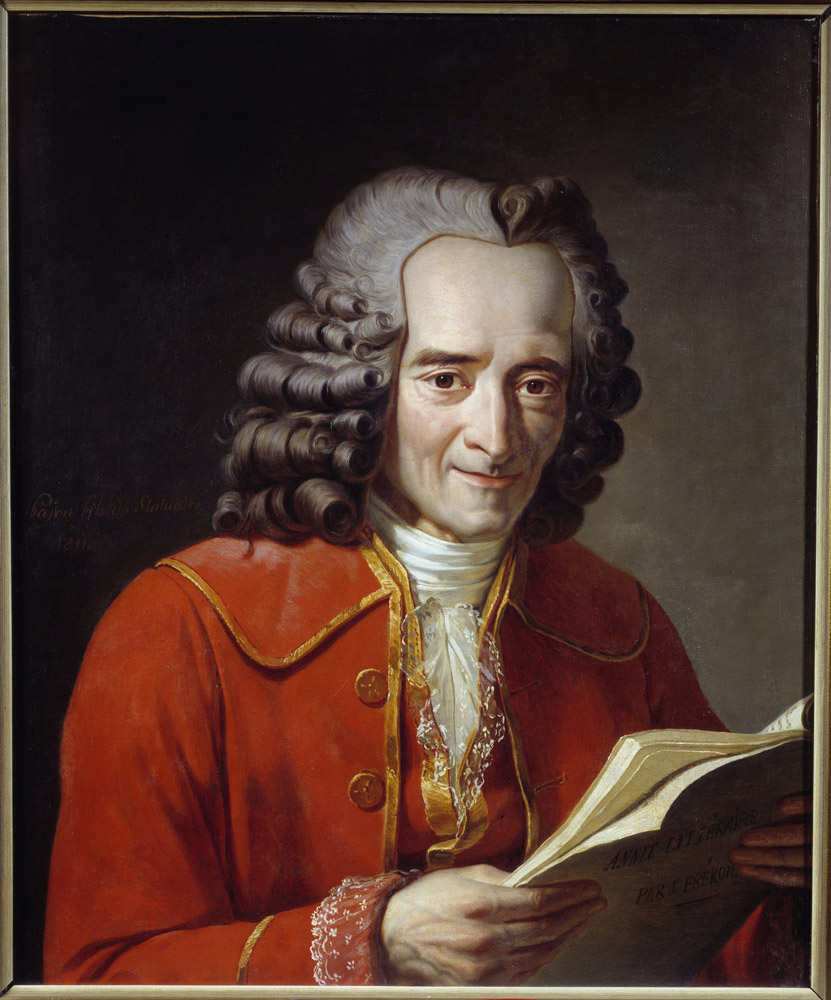
Voltaire
A French Enlightenment writer, historian, and philosopher famous for his wit, his criticism of Christianity, and his advocacy of freedom of speech.
This biography of Voltaire helps you learn English through real historical stories.
born1694
died1778
nationalityFrench
known foradvocating civil liberties, writing Candide, and criticizing religious dogma
fieldphilosophy and literature
Key Takeaways
- He was a key figure of the Enlightenment who championed freedom of speech and religion
- He wrote 'Candide', a famous satire mocking blind optimism and social injustice
- He was imprisoned and exiled multiple times for criticizing the French monarchy and Church
- He advocated for the separation of church and state and the use of reason over dogma
Life Timeline
1694
Born François-Marie Arouet in Paris
1717
Imprisoned in the Bastille for writing satirical verses about the government
1726-1729
Exiled to England, where he was influenced by British political ideas
1759
Published his most famous work, the satirical novella 'Candide'
1778
Returned to Paris as a hero and died shortly after
Biography Reading: Voltaire
background
Voltaire, born François-Marie Arouet in 1694, was one of the most influential figures of the French Enlightenment. From a young age, he displayed a brilliant but rebellious wit that frequently landed him in trouble with the French authorities. He was twice imprisoned in the Bastille for his satirical writings against the aristocracy and the church. His time in exile in England profoundly shaped his world-view, as he became an admirer of Britain's constitutional monarchy and its greater tolerance for diverse religious and political ideas compared to the absolute monarchy of France.
achievement
Voltaire was a prolific writer, producing thousands of letters, plays, poems, and essays throughout his long life. His most famous work, the satirical novella "Candide," remains a classic of Western literature, using dark humor to mock the optimistic philosophy of his time and expose the cruelties of war and religious fanaticism. He was a tireless advocate for civil liberties, famously defending individuals who were unjustly persecuted for their beliefs. Voltaire believed that a society's progress depended on its ability to embrace reason and protect the fundamental right of every person to think and speak freely.
impact
Although he was a critic of organized religion, particularly the Catholic Church, Voltaire was a deist who believed in a supreme creator discoverable through reason rather than revelation. He argued for the separation of church and state, a concept that would become a cornerstone of modern democratic societies. His legacy is defined by his courage to challenge powerful institutions and his unwavering commitment to intellectual freedom. Even today, the spirit of Voltaire continues to inspire those who fight against censorship, intolerance, and the abuse of power.
Essential Vocabulary
satirical
using humor, irony, exaggeration, or ridicule to expose and criticize people's stupidity or vices
exile
the state of being barred from one's native country, typically for political or punitive reasons
prolific
producing much fruit, foliage, or many offspring; in a creative sense, producing many works
fanaticism
the quality of being fanatical; obsessive enthusiasm
deist
someone who believes in the existence of a supreme being, specifically of a creator who does not intervene in the universe
censorship
the suppression or prohibition of any parts of books, films, news, etc. that are considered obscene, politically unacceptable, or a threat to security
Knowledge Check Quiz
FACTUAL1 / 4
What is the title of Voltaire's most famous satirical novella?
Flashcards
Flashcard
Who was Voltaire?
A French Enlightenment philosopher, writer, and historian.
1 / 9