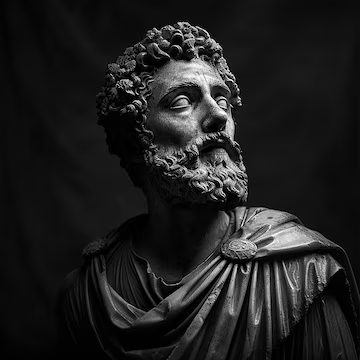
Marcus Aurelius
A Roman Emperor and Stoic philosopher known for his 'Meditations', which remain a foundational text on self-discipline and resilience.
This biography of Marcus Aurelius helps you learn English through real historical stories.
born121 AD
died180 AD
nationalityRoman
known forauthoring Meditations and being the last of the Five Good Emperors
fieldphilosophy and leadership
Key Takeaways
- He was a Roman Emperor and a leading Stoic philosopher
- He wrote 'Meditations' as a personal journal while leading military campaigns
- He is considered the last of the 'Five Good Emperors' of Rome
- His philosophy emphasizes inner peace, self-discipline, and living with virtue
Life Timeline
121 AD
Born in Rome to a prominent noble family
138 AD
Adopted by Antoninus Pius as part of Hadrian's succession plan
161 AD
Became Roman Emperor, initially co-ruling with Lucius Verus
170-180 AD
Wrote his personal reflections (Meditations) while on military campaigns
180 AD
Died in Vindobona (modern-day Vienna) during a campaign against Germanic tribes
Biography Reading: Marcus Aurelius
background
Marcus Aurelius was born in 121 AD into a wealthy and politically influential Roman family. His potential was recognized early by Emperor Hadrian, who arranged for him to be adopted by the future Emperor Antoninus Pius. Unlike many rulers who were consumed by power and luxury, Marcus was drawn to the rigorous teachings of Stoicism from a young age. He was educated by the finest tutors in rhetoric and philosophy, developing a character defined by duty, serious-mindedness, and a deep sense of justice that would later define his reign.
achievement
His reign, beginning in 161 AD, was marked by constant struggle, including devastating plagues, internal revolts, and relentless wars against Germanic tribes on the empire's borders. Despite these immense pressures, Marcus Aurelius is remembered as the last of the "Five Good Emperors" who ruled with wisdom and restraint. During his long military campaigns, he wrote a series of personal reflections intended only for himself. These writings, now known as "Meditations," reveal a man constantly striving to maintain inner peace and moral integrity amidst the chaos of war and the burdens of absolute power.
impact
The core of his philosophy was Stoicism, which taught that while we cannot control external events, we have total control over our own thoughts and reactions. He believed in living in accordance with nature and reason, viewing every obstacle as an opportunity to practice virtue. His writings emphasize the brevity of life, the importance of focusing on the present moment, and the duty to serve the common good of humanity. Nearly two thousand years later, Marcus Aurelius remains a powerful symbol of how philosophical principles can provide strength and clarity in the face of overwhelming adversity.
Essential Vocabulary
Stoicism
an ancient Greek school of philosophy that taught the development of self-control and fortitude
resilience
the capacity to recover quickly from difficulties; toughness
rhetoric
the art of effective or persuasive speaking or writing
restraint
unemotional, dispassionate, or moderate behavior; self-control
integrity
the quality of being honest and having strong moral principles
adversity
difficulties; misfortune
Knowledge Check Quiz
FACTUAL1 / 4
What is the name of the famous book written by Marcus Aurelius?
Flashcards
Flashcard
Who was Marcus Aurelius?
A Roman Emperor and Stoic philosopher.
1 / 9