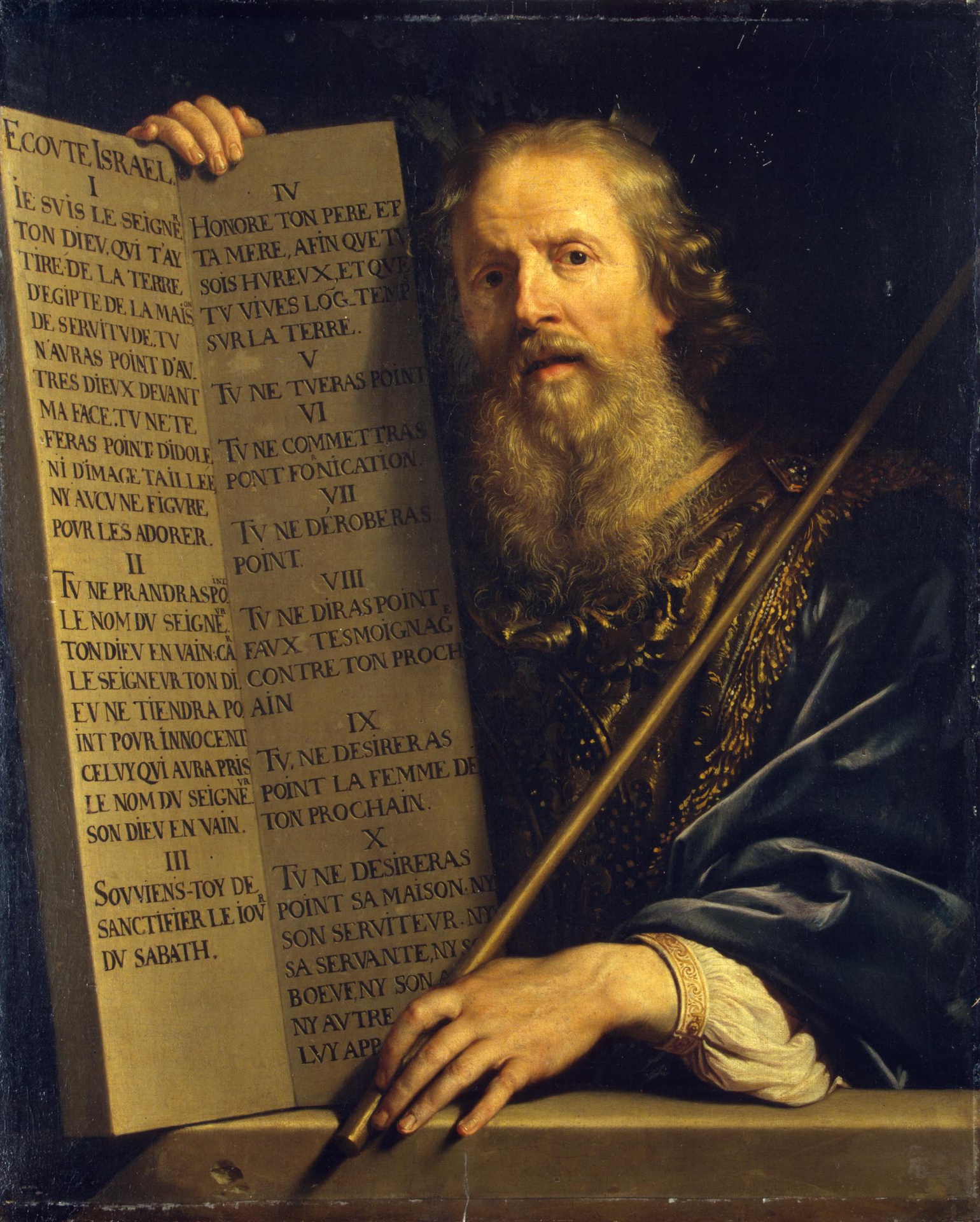
Moses
The most important prophet in Judaism, credited with leading the Israelites out of Egyptian slavery and receiving the Torah.
This biography of Moses helps you learn English through real historical stories.
bornc. 14th-13th century BC
diedc. 13th-12th century BC
nationalityIsraelite
known forleading the Exodus and receiving the Ten Commandments
fieldreligion and law
Key Takeaways
- He led the Israelites out of slavery in Egypt in a monumental event known as the Exodus
- He encountered God in a burning bush and was chosen to liberate his people
- He received the Ten Commandments and the Torah on Mount Sinai
- He guided the Israelites through 40 years of wandering but died before entering the Promised Land
Life Timeline
c. 13th century BC
Born in Egypt and adopted by the Pharaoh's daughter
Early adulthood
Fled to Midian after killing an Egyptian taskmaster
Age 80 (tradition)
Encountered God in the burning bush and returned to Egypt
The Exodus
Led the Israelites out of Egypt and crossed the Red Sea
Mount Sinai
Received the Ten Commandments and the Torah
End of life
Died on Mount Nebo before entering the Promised Land
Biography Reading: Moses
background
Moses is revered as the most important prophet in Judaism and a foundational figure in Christianity and Islam. According to the biblical Book of Exodus, he was born during a time when the Pharaoh of Egypt had ordered all newborn Hebrew boys to be drowned in the Nile River. To save him, his mother placed him in a waterproof basket and hid him among the reeds. He was discovered by the Pharaoh's daughter, who adopted him and raised him in the Egyptian royal court, giving him a unique education and position of power.
achievement
Despite his royal upbringing, Moses never forgot his Israelite heritage. After killing an Egyptian taskmaster who was beating a Hebrew slave, he fled into the desert of Midian. Years later, he encountered God in the form of a burning bush that was not consumed by the flames. God commanded him to return to Egypt and demand the release of his people. After a devastating series of ten plagues fell upon Egypt, the Pharaoh finally relented. Moses then led the Israelites in a miraculous escape across the parted waters of the Red Sea, a monumental event known as the Exodus.
impact
Following the Exodus, Moses guided the Israelites to Mount Sinai, where he received the Ten Commandments and the Torah (the divine laws) directly from God. These moral and legal codes laid the ethical foundation for Western civilization. He subsequently led his people through forty years of wandering in the harsh wilderness, enduring their rebellions and forging them into a unified nation bound by a sacred covenant. Tragically, Moses died on Mount Nebo at the very edge of Canaan, allowed only to see the Promised Land but never to enter it.
Essential Vocabulary
prophet
a person regarded as an inspired teacher or proclaimer of the will of God
Exodus
a mass departure of people, especially the departure of the Israelites from Egypt
plague
a contagious bacterial disease or a disastrous evil or affliction
covenant
a binding agreement, especially a sacred promise between God and humanity
wilderness
an uncultivated, uninhabited, and inhospitable region
rebellion
an act of violent or open resistance to an established government or ruler
Knowledge Check Quiz
FACTUAL1 / 4
Where did Moses receive the Ten Commandments?
Flashcards
Flashcard
Who led the Israelites out of Egyptian slavery?
Moses.
1 / 9